
Compost Tea Brewing Services
Fungal-Dominant, Biologically Active Compost Tea
Compost tea is a powerful way to introduce beneficial microorganisms back into agricultural soils. When properly brewed and applied, these living microbes can help accelerate nutrient cycling, build soil structure, and support long-term organic matter formation.
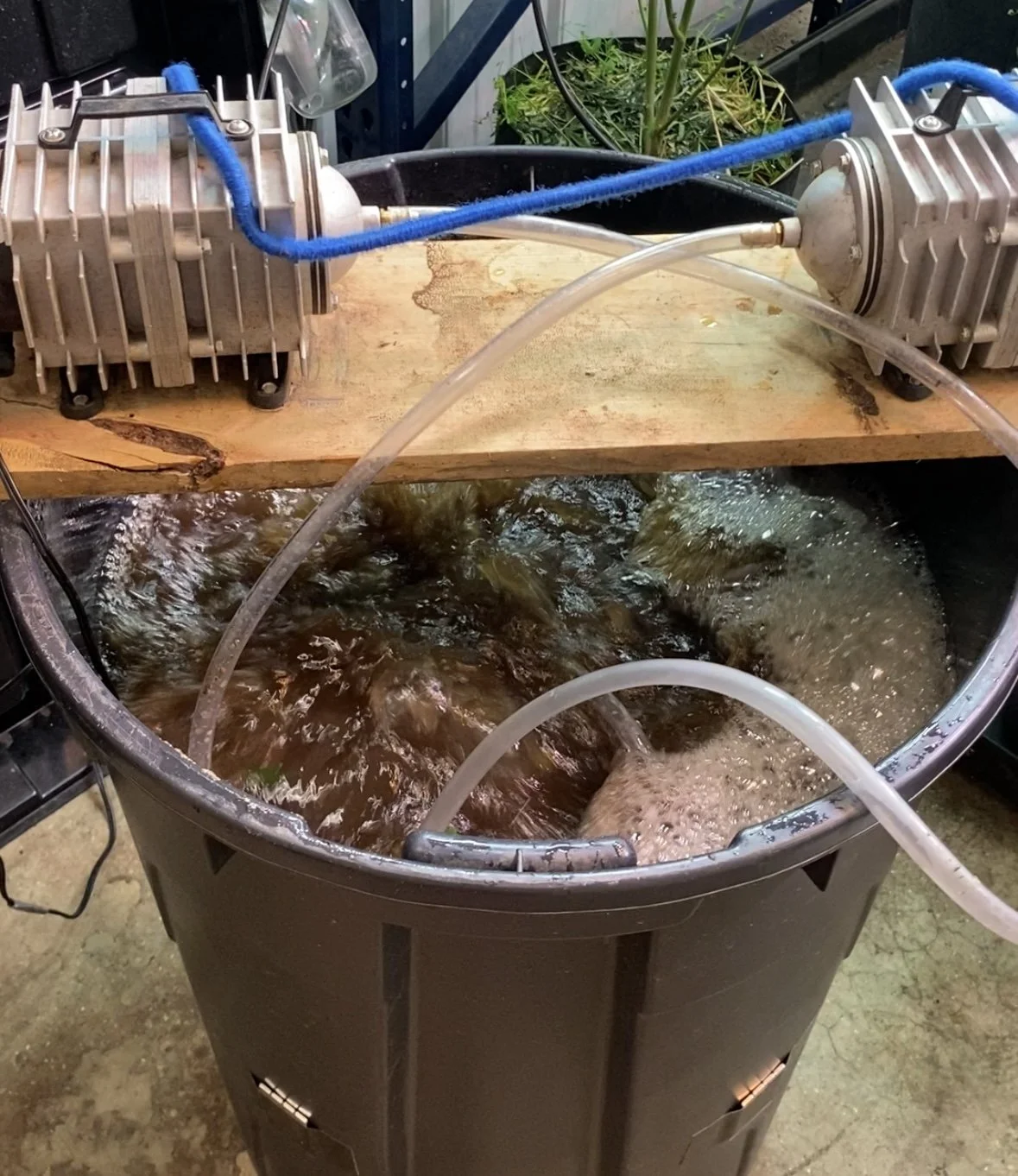
Over the past several years, I have developed a compost tea recipe designed to grow large populations of beneficial organisms including bacteria, fungal hyphae, and protozoa. The goal is to produce a biologically active inoculant that supports healthy soil ecosystems in vineyards and farms.
How The Service Works
02
Ongoing Brew Rentals
After the initial training, growers can rent the brewing equipment and materials for future brews throughout the season.
The rental includes:
• Compost for the brew
• Brewing equipment
• Food resources (sugar source, fish hydrolysate, and mineral inputs)
• Guidance on brewing and application timing
This model allows farms to apply biological inoculants multiple times during the growing season without needing to purchase their own brewing infrastructure.
01
Initial Brew & Training
During the first visit I will:
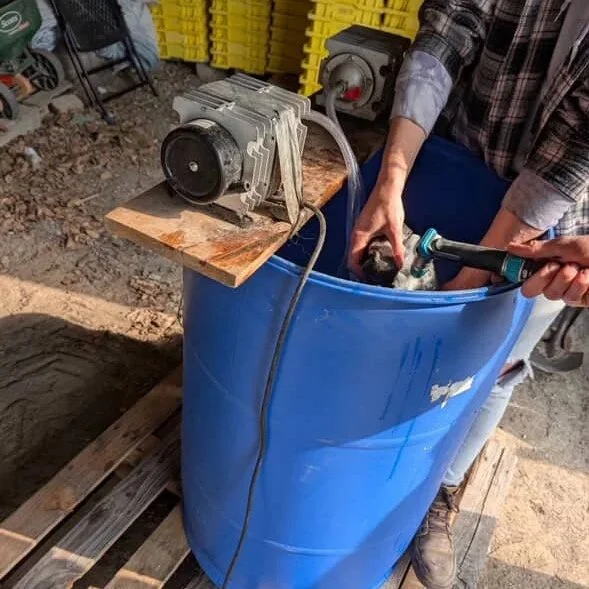
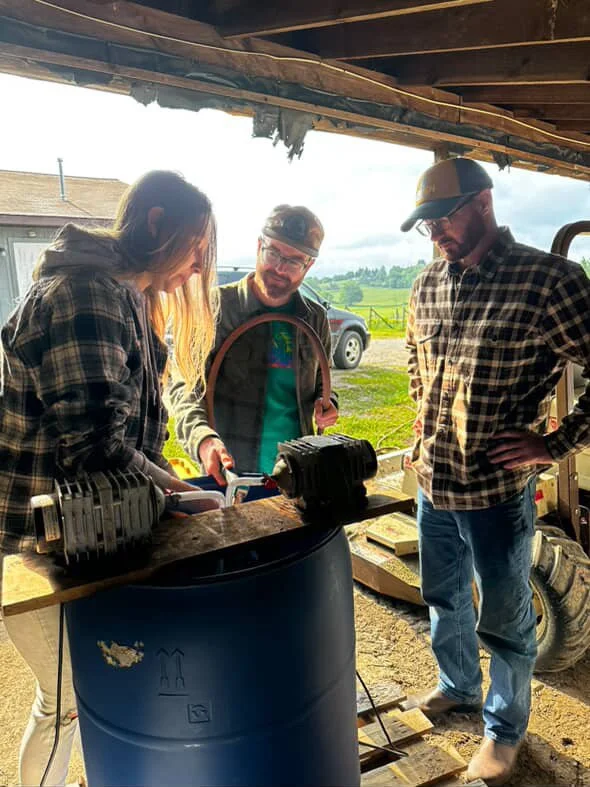
• Set up the compost tea brewing system
• Provide high-quality compost and food resources
• Brew the tea with you and walk through the full process
• Evaluate the tea under a microscope to confirm microbial growth
• Help troubleshoot and adjust spray equipment to ensure microbes survive application
This initial session allows growers to understand the process and confirm viability directly before applying it to their soil.
My compost tea service is designed to help growers learn the brewing process and apply living biology to their fields without needing to invest in equipment immediately.
Soil vs Foliar Applications
Biologically active compost tea can be applied either to the soil or directly to plant leaves, depending on the goals of the farm.
Soil Applications
Soil drenches introduce beneficial microbes directly into the soil ecosystem where they can:
• accelerate organic matter decomposition
• support nutrient cycling
• improve soil aggregation
• help rebuild microbial diversity in degraded soils
These microbes interact with plant roots and organic inputs to help build long-term soil fertility.
Foliar Applications
When applied to plant leaves, compost tea introduces beneficial microbes to the phyllosphere (the microbial ecosystem living on plant surfaces).
Healthy leaf microbial communities can:
• compete with plant pathogens
• improve plant resilience
• support nutrient cycling on leaf surfaces
Foliar applications are often used in vineyards and specialty crops to support plant health throughout the growing season.
Pricing
Initial Brew & Training
$300
Includes:
• Full brew setup
• Compost and food resources
• Brewing instruction
• Microscopy evaluation of the tea
• Spray equipment troubleshooting
Brew Equipment Rental
$150 per brew
Includes:
• Brewing equipment
• Compost
• Food resources (sugar source, fish source, mineral source)
Growers brew and apply the tea themselves.
Brew + Preparation Service
$200 per brew
Includes:
• Brewing equipment rental
• Compost and food resources
• I prepare the tea for you
Growers apply the tea themselves using their own spray equipment.
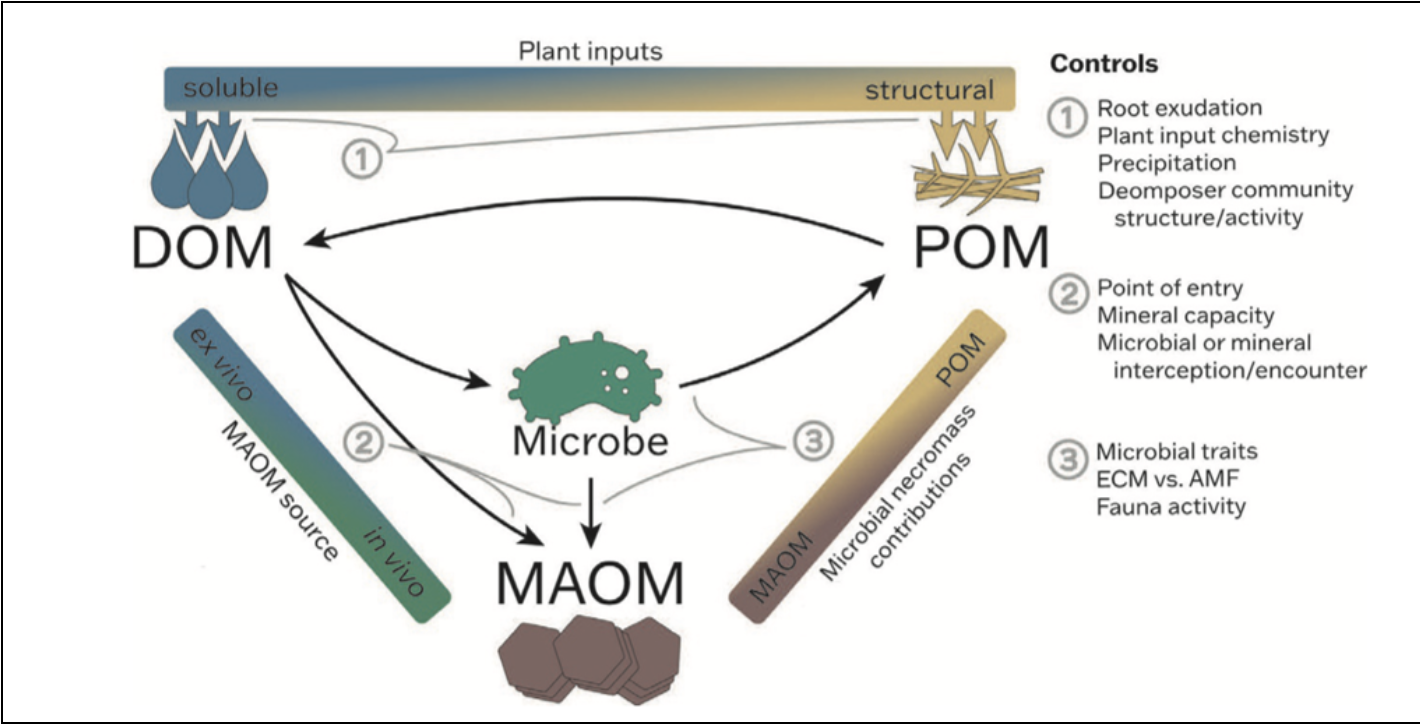
One of the most important roles of soil microbes is how they influence the formation and transformation of soil organic matter.
Organic matter exists in several important forms in soil ecosystems:
Compost Tea and Soil Organic Matter Formation
DOM — Dissolved Organic Matter
This is the most immediately available carbon source in soil. DOM fuels microbial activity and drives nutrient cycling around plant roots.
POM — Particulate Organic Matter
POM consists of partially decomposed plant material and microbial residues. It represents an active pool of organic matter that microbes continue to break down and transform.
Microbial communities — particularly fungi — play a major role in transforming plant residues into these more stable organic matter forms.
Biologically active compost tea helps introduce microbial communities that can accelerate these ecological processes and support long-term soil carbon formation.
MOAM — Mineral Associated Organic Matter
MOAM forms when microbial byproducts bind to soil minerals. This creates highly stable carbon that can remain in soil for decades or longer.
These concepts are discussed in more detail in my co-authored Michigan State University publication on climate resilience in vineyards.
Biologically active compost tea is also a rich source of dissolved organic compounds, including microbial metabolites, simple carbon compounds, and soluble nutrients. These compounds can rapidly stimulate microbial activity in the soil and help jumpstart biological processes around the root zone.
Why Compost Tea?
Applying biologically active compost tea can help:
• Increase microbial diversity in soil
• Improve nutrient cycling and plant nutrient availability
• Support soil aggregation and organic matter formation
• Strengthen plant resilience through healthier soil ecosystems
For vineyards and perennial systems, repeated applications can help rebuild soil biology that has been reduced through years of disturbance or chemical inputs.
Microscopy Verification
One of the most important parts of compost tea brewing is confirming that the tea is biologically active.
During the initial brew, I evaluate the tea under a microscope to confirm that the microbial community is healthy and functioning. This allows growers to see the organisms present in the brew and verify that the system is producing strong biological growth.
Because the brewing recipe and process are highly consistent, testing the first brew on-site is typically sufficient. As long as the same compost, ingredients, and brewing method are used, subsequent brews will reliably produce the same biological results.
Want to Try Compost Tea on Your Farm?
The brewing service allows growers to test compost tea applications without investing in equipment.
Applications can be adjusted to support either soil biology restoration or foliar microbial protection, depending on farm goals.
If you’re interested in exploring biological soil inoculation for your farm or vineyard, feel free to reach out.

Composting is a Revolutionary Act
Waste is a human made problem because in nature nothing is wasted. All organic material is recycled into fertile humus with the help of microorganisms. Waste is a product of a broken system, and composting completes the broken waste cycle. Through composting we can achieve reciprocity with nature.