Soil Health Consulting
Building Regenerative Soil Systems
Healthy soils require more than just nutrients or amendments. True soil health comes from balancing soil chemistry, soil biology, and organic matter dynamics so the entire ecosystem can function properly.
My consulting approach focuses on integrating soil chemistry data, soil biology analysis, and farm management goals to develop practical strategies that transition farms toward more regenerative management systems.
Each soil health plan is designed specifically for the farm and focuses on improving soil function, increasing organic matter, and supporting long-term biological resilience.
The Soil Health Trinity
My work is built around three interconnected components of soil health.
Soil Chemistry
Understanding nutrient levels, pH balance, base saturation, and mineral interactions is essential for correcting deficiencies and supporting plant nutrition.
Soil Biology
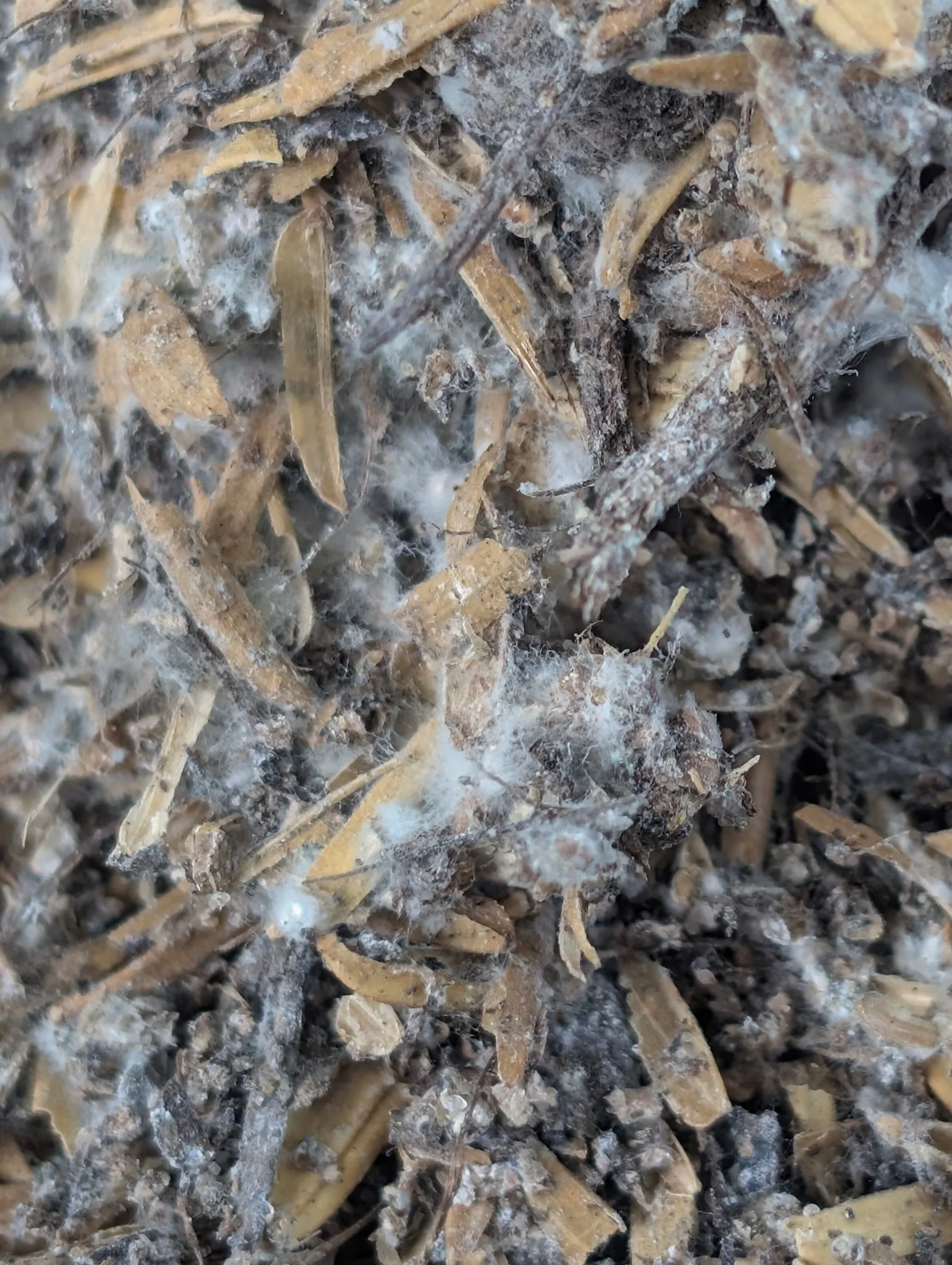
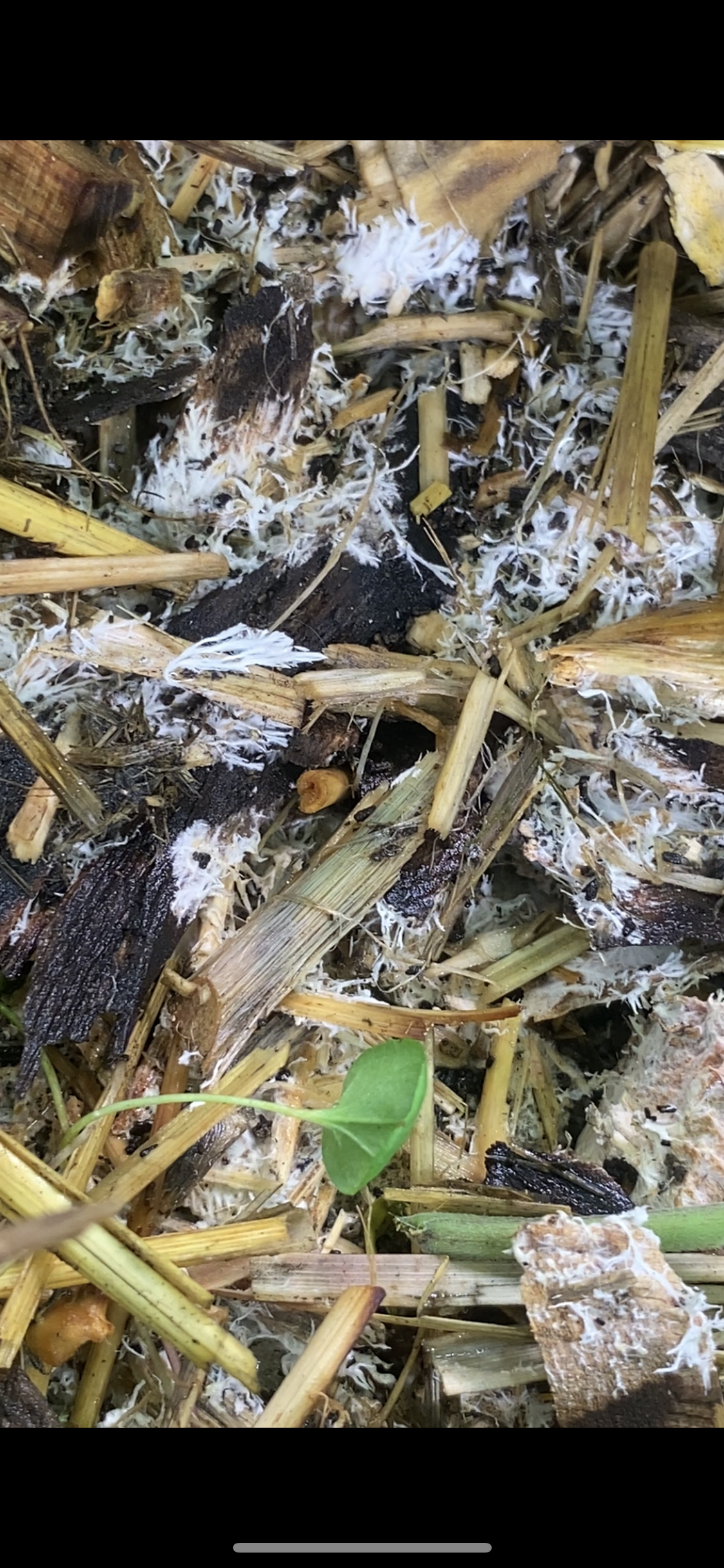
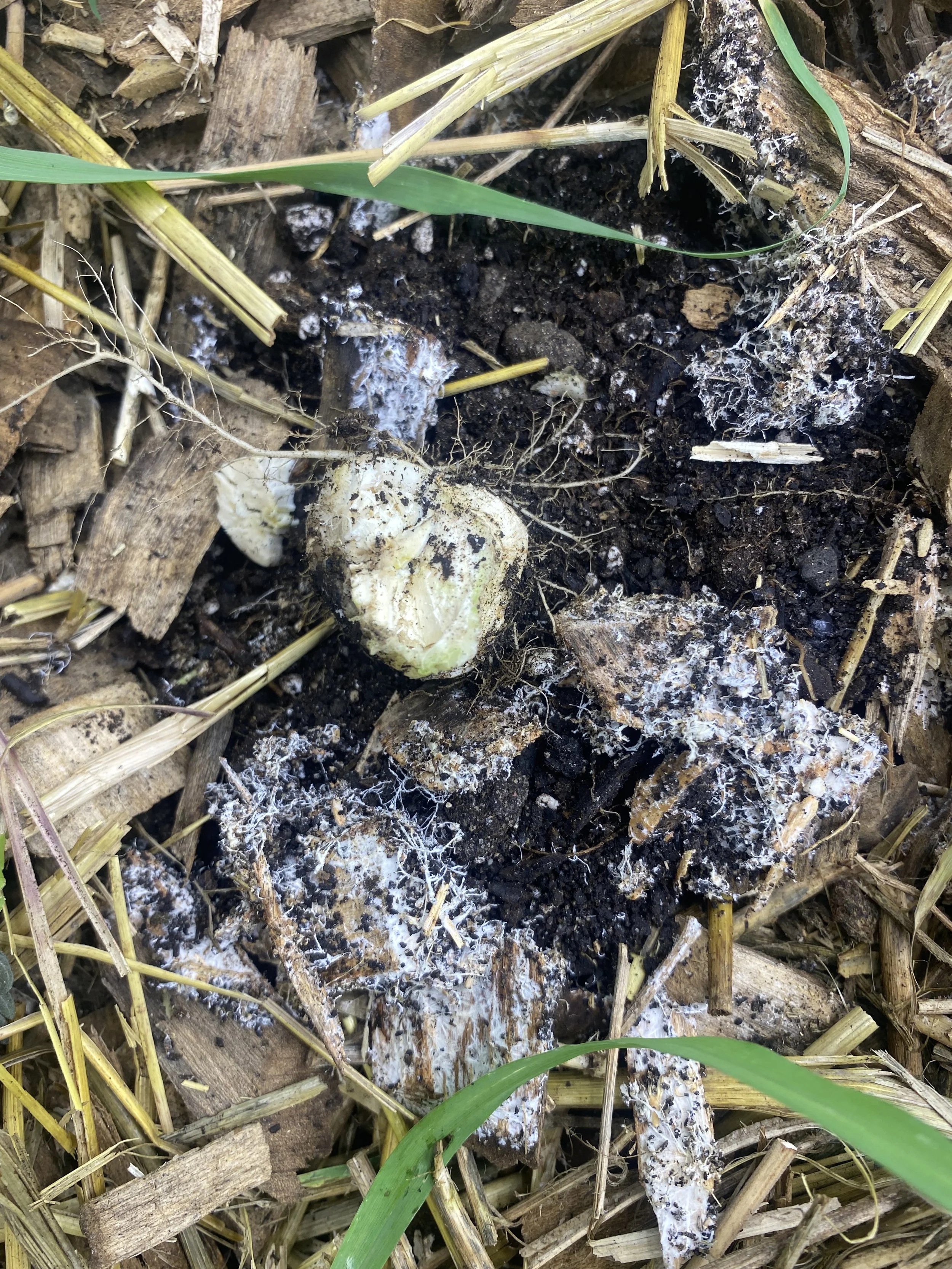
Microbial communities drive nutrient cycling, organic matter formation, and plant resilience. Evaluating soil organisms helps determine whether the biological system is balanced and functioning.
Soil Physics
Organic matter fuels microbial life and builds long-term soil structure. Increasing organic matter improves nutrient holding capacity, water retention, and overall ecosystem stability.
When these three systems work together, soils become more productive and resilient.
How The Process Works
Step 1️⃣ – Farm Questionnaire
Clients begin by completing a questionnaire that helps identify current management practices, farm goals, and key challenges.
Step 2️⃣ – Soil Data Review
Soil chemistry tests and soil biology data are reviewed to identify nutrient imbalances, biological limitations, and organic matter dynamics.
Step 3️⃣ – Soil Health Strategy
Based on the results, I develop a customized soil health strategy designed to improve soil function, increase organic matter, and strengthen biological resilience over time.
Step 4️⃣ – Implementation & Monitoring
Management recommendations are designed to be implemented gradually, allowing farms to transition toward regenerative soil systems while monitoring progress over time.
What a Soil Health Plan Includes
Each farm receives a customized soil health restoration strategy based on soil testing, biological analysis, and management goals.
Typical components include:
• Soil chemistry interpretation
• Integration with soil biology data
• Organic matter building strategies
• Nutrient balancing recommendations
• Regenerative management transitions
• Use of biological inputs
• Pest and disease management strategies
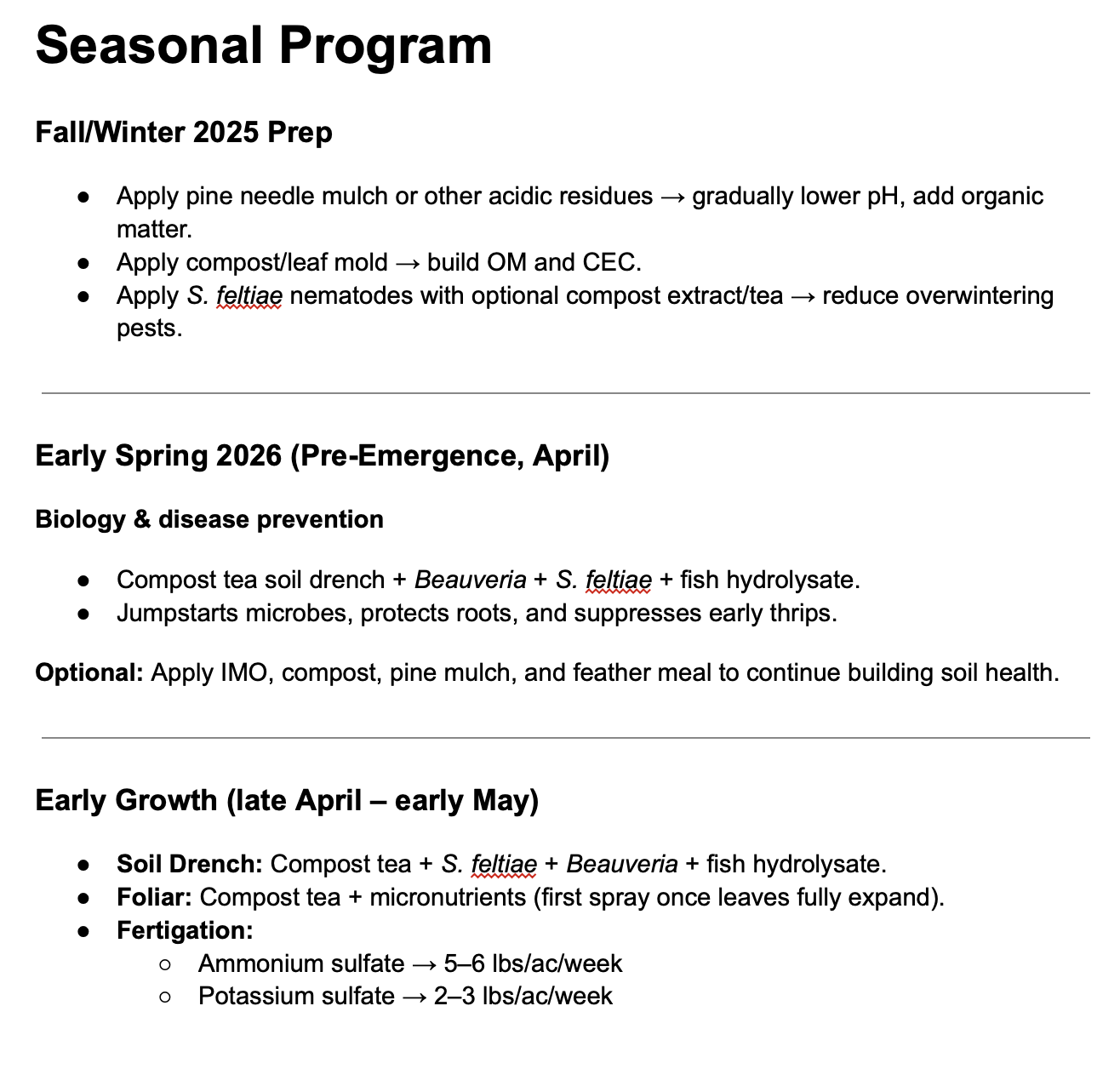
• Seasonal program timeline
The goal is to provide a clear, practical roadmap that farms can implement over time.
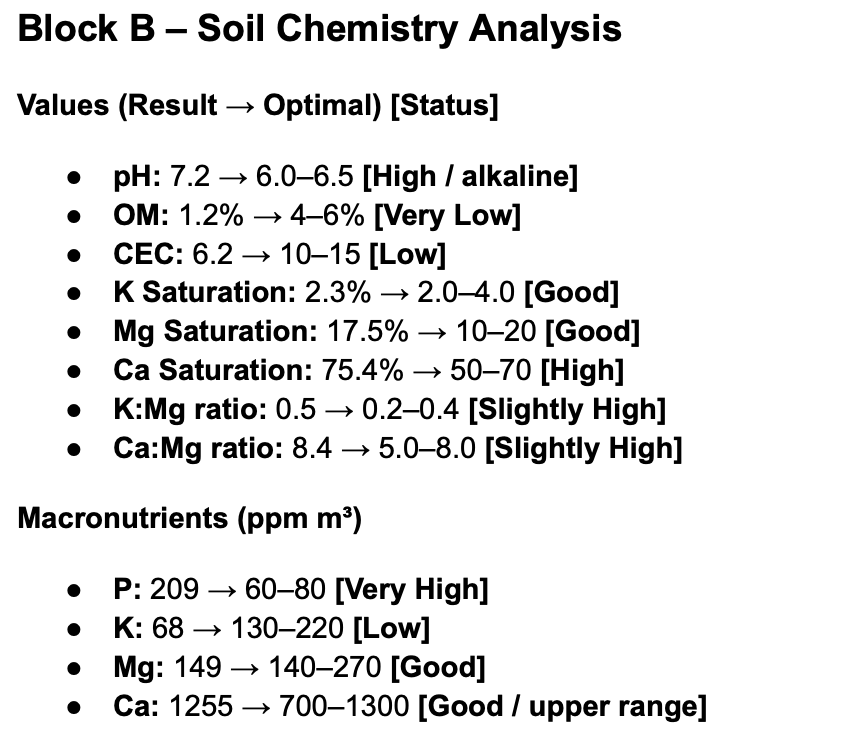
Soil Chemistry Analysis
Soil chemistry data is used to guide nutrient balancing and soil correction strategies.
Typical parameters evaluated include:
• pH balance
• organic matter levels
• cation exchange capacity (CEC)
• base saturation ratios (Ca, Mg, K)
• macronutrients (N, P, K)
• micronutrients (Fe, Mn, Cu, B, Zn)
When available, leaf tissue analysis can also be incorporated to identify nutrient deficiencies affecting plant health and productivity.
How to Get Started
Developing an effective soil health strategy begins with understanding the unique conditions of each farm.
Before creating a soil health plan, clients complete a short farm management questionnaire that provides important background information about their system.
This includes details such as:
• crop types and production goals
• current soil management practices
• irrigation and fertilization programs
• pest and disease challenges
• long-term goals for soil health and regeneration
This information helps ensure that recommendations are tailored to the specific needs of the farm rather than applying generic solutions.
Step 1 – Farm Questionnaire
Clients begin by completing a short questionnaire that helps identify current management practices, farm goals, and key challenges.